



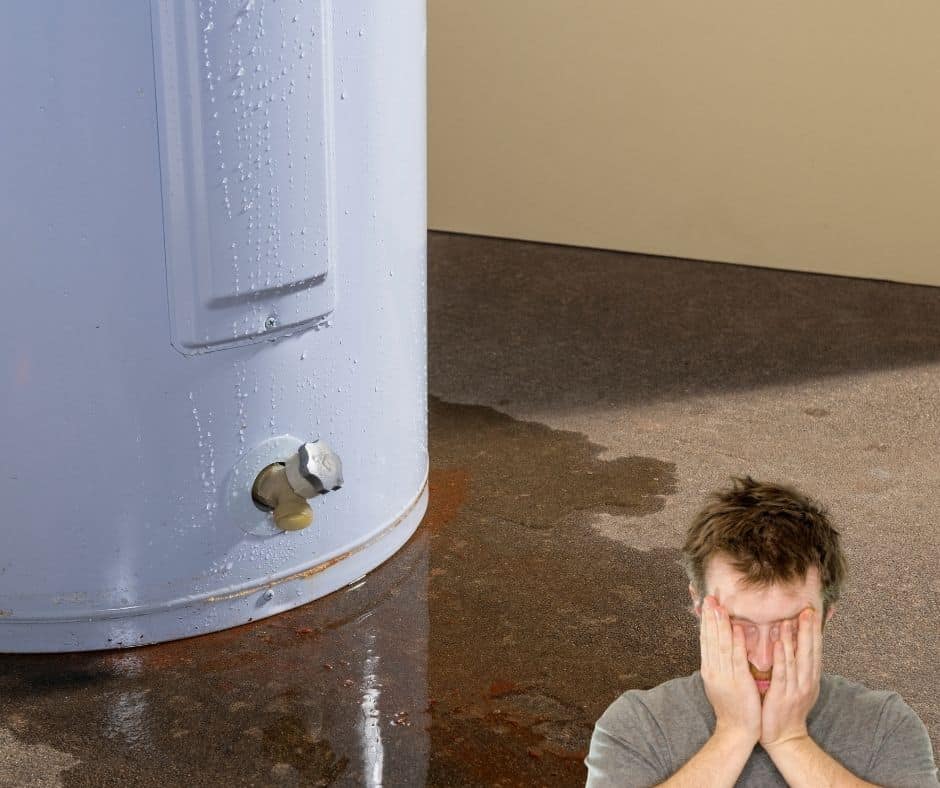
Leaking Water Heater? Here's How to Know If It's an Emergency
You walk into the basement, or your utility room, and there's water pooling around your water heater. Is this a "call someone today" problem, or can it wait until tomorrow morning? It's one of the most common questions we get from Pittsburgh homeowners — and the honest answer is: it depends on where the water's actually coming from, not just that it's there.
Here's how to tell the difference, what to do in the meantime, and when it's genuinely time for water heater repair.
Why Water Heaters Leak in the First Place
Before you can decide how urgent a leak is, it helps to know what's usually causing it. In Pittsburgh homes, the most common culprits are:
- Sediment buildup — minerals from hard water settle at the bottom of the tank over time, corroding the metal from the inside out
- Age — most tanks are built to last 8–12 years; past that, the steel itself starts to weaken
- A failing temperature-pressure (T&P) relief valve — this safety valve is designed to release water under certain pressure conditions, and a worn one can leak even when nothing else is wrong
- Loose or corroded fittings — where pipes connect to the tank is a common weak point, especially on older installations
- Excess pressure — a faulty expansion tank or high municipal water pressure can stress the system enough to force a leak
Knowing which of these you're dealing with changes everything about how urgent the situation is.
When It's a True Emergency
Some leaks can't wait for business hours:
- Water is actively spraying or gushing, not just dripping or seeping
- The leak is coming from the tank itself — a crack or a bulge in the metal — rather than a pipe, valve, or fitting
- You smell gas near the unit
- The floor around the tank is visibly flooding or spreading quickly
If any of that describes what you're seeing, shut off the water supply to the tank, and turn off the power or gas to the unit if you can do so safely. Then call for 24-hour emergency service right away. A leaking tank can go from "small drip" to "full failure" with very little warning, and the longer it sits, the more damage it can do to your floors, walls, and anything stored nearby.
When It Can Usually Wait for a Scheduled Repair
Not every drip is a crisis. A small amount of moisture around a fitting, valve, or the T&P relief pipe is often just a loose connection or a worn washer — annoying, and worth addressing soon, but not dangerous overnight. That's a job for standard water heater repair on your schedule, not a 2 a.m. emergency call. You can usually place a shallow pan under the leak and keep an eye on it until a technician can get out.
How to Tell the Difference Yourself
A simple way to check: dry the area completely with a towel, then leave it alone and check back in 15–20 minutes.
- Water returns fast and keeps spreading → likely the tank itself. Treat it as urgent and shut things down.
- Water returns slowly, and only right around a fitting or valve → likely a minor, fixable leak. Schedule a repair visit.
- You can't tell where it's coming from at all → that's worth a call on its own. Guessing wrong in either direction either means an unnecessary emergency trip or a small leak left to get worse.
If you're ever unsure, don't sit with it overnight just to save a phone call — a quick call is a lot faster than dealing with a flooded basement later. Our team can often tell over the phone whether it's safe to wait until morning.
What Happens During a Water Heater Repair Visit
Once a technician is on-site, the first step is always finding the actual source of the leak — a fitting leak and a cracking tank can look nearly identical from the outside until someone traces the water back. From there, a few things can happen:
- Fitting or valve leak: usually repaired the same visit, often for the cost of a part and labor
- T&P valve issue: typically a straightforward valve replacement
- Tank leak: unfortunately, once the tank itself is compromised, repair isn't an option — at that point we'll walk you through replacement options instead
- Unclear source: if water is present but the tank looks intact, we may recommend leak detection to rule out a nearby pipe or fixture instead of the water heater itself
Most repair visits are done within the hour, and you'll know before any work starts whether you're looking at a repair or a replacement conversation.
What About Tankless Water Heaters?
Everything above is about leaks — but tankless units fail in a completely different way. Since there's no standing tank of water, there's usually nothing to leak in the first place. Instead, a failing tankless unit tends to show up as:
- An error code on the display — most tankless systems flag the problem for you, which actually makes diagnosis faster than with a traditional tank
- No hot water, or hot water that cuts out mid-use — often a sign of a flow sensor issue, a clogged inlet filter, or a failing igniter
- The unit won't fire up at all — commonly a gas supply, venting, or power issue rather than the unit itself
- Lukewarm water in cold weather — tankless systems can struggle to keep up with very cold incoming groundwater temperatures if they're undersized or need a service flush
None of these are usually a "shut off the water and call right now" situation the way an active leak is — but a tankless unit that won't produce hot water at all is still worth a same-day call, especially in winter. Most tankless issues are a straightforward water heater repair once a technician reads the error code and traces it back, rather than a sign you need a whole new unit.
Get Water Heater Repair in Pittsburgh Today
We've handled water heater emergencies and repairs for Pittsburgh homeowners since 1987 — from Pittsburgh and Moon Township to Bridgeville and Cranberry Township. Whether it's a same-day leak or a repair you can schedule for next week, we'll help you figure out which one you're actually dealing with — and take care of it either way.
- Ask about financing if repair turns into replacement
- Check current specials before you book
855-544-2378 or contact us online to schedule your water heater repair.